

Quick Answer
Bis(tert-butylperoxyisopropyl)benzene (BIPB, CAS 25155-25-3) has transformed the peroxide crosslinking landscape over the past two decades. What began as a specialty alternative to dicumyl peroxide (DCP) has evolved into the industry standard for odor-sensitive crosslinking applications, driven by tightening consumer expectations, regulatory requirements, and the inherent performance advantages BIPB offers over traditional peroxide systems.
The Rise of BIPB in Crosslinking Technology
Bis(tert-butylperoxyisopropyl)benzene (BIPB, CAS 25155-25-3) has transformed the peroxide crosslinking landscape over the past two decades. What began as a specialty alternative to dicumyl peroxide (DCP) has evolved into the industry standard for odor-sensitive crosslinking applications, driven by tightening consumer expectations, regulatory requirements, and the inherent performance advantages BIPB offers over traditional peroxide systems.
Key Facts: BIPB Crosslinking Revolution
- Market Driver: Elimination of acetophenone odor from DCP decomposition
- Adoption Rate: >60% of new XLPE production lines specify BIPB
- Primary Markets: PEX pipes, XLPE cables, EVA films, rubber vulcanization
- Efficiency: ~1.25x DCP dosage (by weight) for equivalent crosslink density
- Temperature Window: 160-200 deg C for most applications
Why BIPB Won the Crosslinking Market
The transition from DCP to BIPB represents one of the most significant shifts in peroxide crosslinking technology in decades. The driving force is straightforward: DCP decomposition produces acetophenone, a compound with a strong, persistent, and objectionable odor. This odor carries through to the finished product, severely limiting DCP’s acceptability in consumer-facing applications. BIPB decomposes to yield primarily acetone and tert-butanol — low-odor, readily volatile compounds that do not compromise the sensory properties of the final product.
BIPB Application Spectrum
PEX Pipe Production
The plumbing and heating industry has almost universally adopted BIPB-crosslinked PEX for potable water applications. PEX-a (peroxide-crosslinked) pipe produced with BIPB meets the most stringent drinking water standards worldwide, including NSF/ANSI 61 in North America, DVGW W 270 in Germany, and AS/NZS 4020 in Australia/New Zealand. The absence of odor and taste transfer to water is a critical requirement that BIPB uniquely satisfies.
Wire and Cable XLPE
Medium and high-voltage power cables require crosslinked polyethylene (XLPE) insulation for thermal stability and dielectric performance. BIPB is the preferred crosslinking agent for continuous vulcanization (CV) lines, where its predictable decomposition kinetics and minimal scorch tendency ensure consistent product quality and high line speeds.
Photovoltaic EVA Films
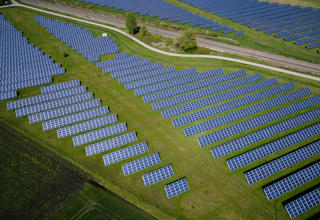
The rapid growth of solar energy has created substantial demand for BIPB-crosslinked EVA encapsulation films. These films must maintain optical clarity, adhesion, and durability over 25+ years in field service. BIPB’s low-odor decomposition products are particularly important for enclosed PV module applications where any residual odor would be unacceptable.
Processing Considerations
Formulators transitioning from DCP to BIPB should note the following adjustments:
- Dosage: BIPB molecular weight (338.49 g/mol) is ~25% higher than DCP (270.37 g/mol). Adjust dosage to maintain equivalent molar peroxide concentration.
- Cure Temperature: BIPB 1-hour half-life temperature (~155 deg C) is comparable to DCP. Existing cure profiles typically require minimal adjustment.
- Scorch Safety: BIPB offers excellent processing safety. Mooney scorch times are generally comparable to or better than DCP at compounding temperatures.
- Co-agents: Conventional co-agents (TAC, TAIC, TMPTMA) remain effective with BIPB systems.
Frequently Asked Questions
Q: Is BIPB more expensive than DCP?
A: On a per-kilogram basis, BIPB is typically more expensive than DCP. However, the total cost of ownership analysis often favors BIPB when considering: (1) the premium pricing achievable for odorless products, (2) elimination of post-cure deodorization steps, (3) reduced waste from odor-rejected product, and (4) access to markets (potable water, food contact) where DCP is simply not acceptable.
Q: Can existing DCP equipment be used for BIPB?
A: Yes, BIPB can be processed on the same equipment as DCP with minimal modifications. Key considerations include adjusting feed rates for the different density and particle size of BIPB, ensuring adequate dispersion, and verifying that cure temperature profiles are appropriate. No capital-intensive equipment changes are typically required.
Key Takeaways
- BIPB (CAS 25155-25-3) has become the industry standard for odorless peroxide crosslinking, largely replacing DCP in premium applications.
- The elimination of acetophenone odor is the primary market driver, enabling access to potable water, food contact, and medical applications.
- Key end uses include PEX pipes, XLPE power cables, and EVA photovoltaic encapsulation films.
- Dosage adjustment (~1.25x by weight) is required when replacing DCP due to molecular weight differences.
- Shandong Do Sender Chemicals supplies high-quality BIPB supporting the global transition to odorless crosslinking technology.