

Quick Answer
Polymer crosslinking is the process of creating chemical bonds (crosslinks) between polymer chains, transforming a thermoplastic (linear or branched chains) into a three-dimensional network structure. Crosslinking dramatically improves heat resistance, chemical resistance, mechanical strength, and dimensional stability—properties that are critical in wire & cable, automotive, and industrial applications.
What Is Polymer Crosslinking?
Polymer crosslinking is the process of creating chemical bonds (crosslinks) between polymer chains, transforming a thermoplastic (linear or branched chains) into a three-dimensional network structure. Crosslinking dramatically improves heat resistance, chemical resistance, mechanical strength, and dimensional stability—properties that are critical in wire & cable, automotive, and industrial applications.
Organic peroxides are the industry-standard crosslinking agents for polyolefins (PE, PP, EVA), elastomers (EPDM, silicone), and fluoropolymers, because they decompose at processing temperatures to generate free radicals that abstract hydrogen atoms from the polymer backbone, creating carbon-carbon crosslinks.
Crosslinking Methods Compared
| Method | Mechanism | Typical Temperature | Advantages | Limitations |
|---|---|---|---|---|
| Peroxide crosslinking (hot water / steam) | Chemical (radical) | 130–200°C | Excellent properties, low CapEx | Requires peroxide handling |
| Radiation crosslinking (E-beam / gamma) | Radical (ionizing radiation) | Ambient | No chemical residues | High CapEx, limited thickness |
| Silane crosslinking | Moisture-cured Si–O–Si | 60–90°C + moisture cure | Lower temp processing | Slower cure, hydrolysis risk |
Key Peroxide Types for Crosslinking
1. Dicumyl Peroxide (Perodox DCP)
The most widely used crosslinking peroxide for EPDM rubber, PE, and EVA. Its 1-hour half-life temperature of ~171°C aligns well with typical crosslinking oven temperatures (150–180°C).
- Applications: Wire & cable insulation, rubber seals, crosslinked PE pipes.
- Dosage: 0.5–2.5 phr (parts per hundred rubber).
2. 2,5-Dimethyl-2,5-di(tert-butylperoxy)hexane (Perodox 101)
A bifunctional dialkyl peroxide with excellent scorch safety. Its symmetrical structure provides two radical sites per molecule, making it highly efficient for crosslinking PE and EPDM.
- Applications: XLPE (crosslinked PE) pipes, rotational molding, EPDM roofing membranes.
- Dosage: 0.3–2.0 phr.
3. tert-Butyl Cumyl Peroxide (Perodox 119)
Offers a lower decomposition temperature (~162°C for 1h t½), making it suitable for heat-sensitive polymer systems or lower-temperature crosslinking processes.
4. 2,5-Dimethyl-2,5-di(tert-butylperoxy)-3-hexyne (Perodox 14)
A specialized bifunctional peroxide for silicone rubber and fluoroelastomer crosslinking. The –C≡C– spacer provides unique flexibility in the crosslinked network.
Crosslinking Efficiency: Key Metrics
| Metric | Definition | Target Range |
|---|---|---|
| Gel content | Insoluble fraction after extraction | 60–85% (PE); >90% (rubber) |
| Crosslink density | Moles of crosslinks per unit volume | Optimized per application |
| Scorch time (ts2) | Time to onset of crosslinking at processing temp | >8 min (safe processing) |
| Cure time (t90) | Time to reach 90% of max torque | 10–30 min (oven cure) |
Applications by Industry
- Wire & Cable: XLPE insulation for low-, medium-, and high-voltage cables. Perodox DCP and Perodox 101 are industry standards.
- Automotive: Crosslinked EPDM seals, hoses, and gaskets. Peroxide-cured EPDM offers superior heat aging vs. sulfur cure.
- Pipe & Tubing: Crosslinked PE (PEX) for hot-water plumbing. Peroxide (a) or silane (b) methods.
- Footwear: Crosslinked EVA foam midsoles. Perodox LUNA (lauroyl peroxide) is often used in foam applications.
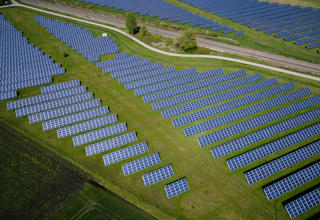
- Solar: Crosslinked EVA encapsulation sheets for photovoltaic modules. Peroxide-cured EVA provides long-term adhesion and UV stability.
Frequently Asked Questions
Q: What is the difference between peroxide crosslinking and sulfur vulcanization?
A: Peroxide crosslinking creates C–C bonds (strong, stable); sulfur vulcanization creates polysulfide crosslinks (weaker, but more flexible). Peroxide-cured rubber has superior heat resistance and lower compression set.
Q: Can I use the same peroxide for both crosslinking and foaming?
A: Yes—peroxide foaming (e.g., LDPE foam) uses the same radical mechanism. The peroxide must decompose at the foaming temperature. Perodox LUNA and Perodox 187 are commonly used.
Q: How do I ensure uniform crosslinking in thick sections?
A: Use a peroxide with appropriate half-life, ensure adequate oven dwell time, and consider using a two-stage peroxide blend for thick-wall cable insulation.
Do Sender Crosslinking Solutions
Shandong Do Sender Chemicals Co., Ltd. supplies a full range of Perodox® organic peroxides for crosslinking applications. Our technical team provides crosslinking kinetics analysis, scorch safety evaluation, and on-site support for wire & cable, rubber, and foam producers worldwide. All products are REACH-compliant and ISO 9001 certified.
Contact our technical team for a customized crosslinking formulation based on your polymer type, processing method, and target properties.