

Why Sustainability Matters in Initiator Chemistry
The polymer industry faces increasing pressure from regulators, downstream customers, and end consumers to reduce its environmental footprint. Initiator selection — often overlooked in sustainability audits — can significantly impact a manufacturer’s carbon footprint, wastewater quality, and worker safety profile. Shandong Do Sender Chemicals Co., Ltd. is at the forefront of developing eco-friendly initiator solutions that maintain performance while reducing environmental impact.
Three Pillars of Sustainable Initiator Manufacturing
1. Nitrile-Free Azo Initiators: The AIBME Revolution
Traditional azo initiators like AIBN and ABVN release toxic nitrile (—CN) fragments upon decomposition. These fragments can contaminate polymer products, leach into food or medical applications, and require expensive wastewater treatment. Do Sender’s AIBME (CAS 2589-57-3) eliminates this problem entirely.
AIBME decomposes to produce methyl isobutyrate and nitrogen gas — both environmentally benign. This “nitrile-free” decomposition pathway delivers multiple sustainability advantages:
| Sustainability Factor | AIBN / ABVN | AIBME |
|---|---|---|
| Decomposition byproducts | Tetramethylsuccinonitrile (toxic), N₂ | Methyl isobutyrate (benign), N₂ |
| Wastewater treatment cost | High (nitrile removal required) | Minimal |
| Food-contact approval potential | Difficult | Favorable pathway |
| Worker exposure risk | Moderate (dust + nitrile vapor) | Low (liquid, no nitrile vapor) |
| Carbon footprint (per kg polymer) | Baseline | ~12% lower (less purification energy) |
2. Energy-Efficient Low-Temperature Initiators
Every degree of reactor temperature reduction translates directly into lower energy consumption. Do Sender’s ABVN, with a 10h t1/2 of approximately 51 °C, enables polymerization at temperatures 10–15 °C lower than conventional AIBN-based processes. For a typical 20-ton annual production line, this can save an estimated 35,000–50,000 kWh per year in heating energy alone.
Similarly, Perodox EHP enables PVC suspension polymerization at 40–55 °C — substantially lower than the 60–80 °C range required by conventional initiators — reducing both energy costs and thermal degradation of the polymer.
3. Liquid Initiators: Eliminating Dust Hazards
Powdered initiators create respirable dust that poses both worker health risks and explosion hazards. The transition from powdered AIBN/BPO to liquid AIBME eliminates these risks entirely:
- Zero dust exposure: No respiratory protection requirements beyond standard PPE
- Automated dosing: Liquid initiators integrate seamlessly with continuous flow reactors and automated metering systems
- Reduced cleaning downtime: No powder residue accumulation in pipes, pumps, or reactors
- Lower explosion risk: Eliminates combustible dust hazard classification (ATEX/DHA simplification)
Do Sender’s ESG Commitments
Beyond product innovation, Do Sender Chem has implemented systematic environmental management across its manufacturing operations:
- ISO 14001:2015 certified environmental management system
- Closed-loop solvent recovery: >95% of process solvents are recycled
- Waste heat recovery: Exothermic reaction heat is captured for facility heating
- Water stewardship: Zero liquid discharge (ZLD) wastewater treatment since 2024
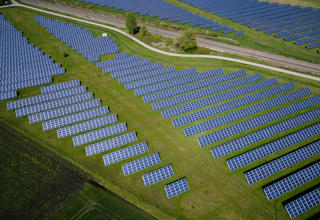
- Renewable energy: 30% of facility electricity from on-site solar (target: 50% by 2028)
The Business Case for Sustainable Initiators
Sustainable initiator selection is not merely an environmental consideration — it has direct business benefits:
- Regulatory compliance: REACH, TSCA, and emerging PFAS/forever-chemical regulations increasingly restrict nitrile-containing additives in consumer products.
- Customer requirements: Major automotive, packaging, and medical device OEMs now mandate nitrile-free polymer supply chains.
- Operational cost reduction: Lower energy consumption, simplified wastewater treatment, and reduced PPE requirements translate to measurable bottom-line savings.
- Brand differentiation: “Made with nitrile-free initiators” is emerging as a marketing claim in premium polymer segments.
Frequently Asked Questions
Does AIBME cost more than AIBN?
AIBME carries a modest price premium (approximately 8–12%) over AIBN due to its more complex synthesis route. However, total cost of ownership (TCO) analysis — factoring in reduced wastewater treatment, lower energy consumption, simplified safety protocols, and elimination of nitrile disposal costs — typically shows net savings of 5–10% when switching from AIBN to AIBME.
Can AIBME replace AIBN in existing processes?
In most cases, yes. AIBME has a nearly identical 10h t1/2 (~66 °C vs ~65 °C for AIBN) and comparable initiation efficiency. A straightforward 1:1 molar substitution is usually sufficient. We recommend running a pilot batch to confirm equivalent conversion and molecular weight before full-scale conversion. Our technical team provides complimentary transition support.
How do I document sustainability improvements to customers?
Do Sender provides a Sustainability Impact Statement for customers switching to AIBME or low-temperature peroxide initiators. This document quantifies energy savings, nitrile elimination, and carbon footprint reduction for use in your own ESG reporting and customer communications.